

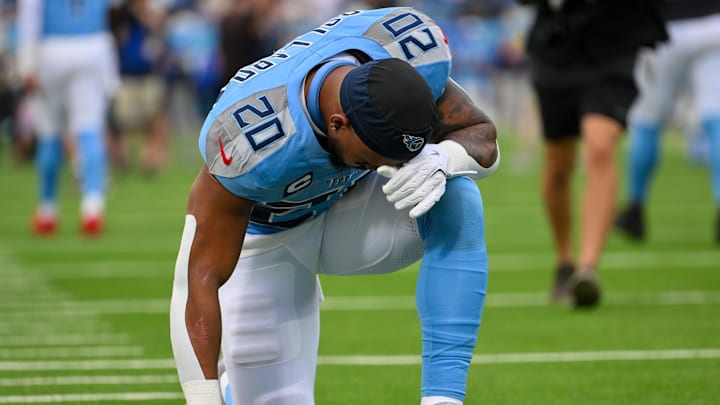
NFL incentives are designed to reward production, but they also create some of the most painful “almost” moments of a regular season. For Tennessee Titans running back Tony Pollard, their 2025 regular-season finale against the Jacksonville Jaguars became one of those moments.
Pollard entered the game needing only 66 rushing yards to reach the first 1,100-yard rushing season of his career and to earn an extra $250,000. Also, two additional rushing touchdowns would have triggered another $200,000 bonus. However, his lowest rushing output since week 12 against the Seattle Seahawks cost Pollard a significant payday.
How close Tony Pollard really was and why it matters
From a production standpoint, Tony Pollard delivered much of what the Titans hoped for this season, especially during the second half. He provided consistency in a backfield that often lacked rhythm, handling his workload without complaint and remaining available week after week. After beginning the season with only 522 rushing yards on 3.7 yards per carry through his first 11 weeks, Pollard provided three 100+ yard rushing games in his final six games.
While he finished 18 yards shy of the 1,100-yard mark, Pollard set a career-high in rushing yards (three yards more than his previous high of 1,079 last season). He also set a career-high in yards per carry as a full-time starter with a 4.5 average (career-high of 5.5 as a reserve).
On paper, his incentive shortage margin feels small, but it’s the difference between crossing a contractual threshold and leaving money on the table. Incentive structures don’t account for context, such as game flow, play-calling, or defensive adjustments, and Pollard experienced that harsh reality firsthand with only 14 carries in his final game.
The missed touchdown incentives add another layer of frustration, especially considering he had one called back due to a penalty in their week 16 victory over the Kansas City Chiefs. Rushing touchdowns are among the most volatile stats in football as they depend heavily on red-zone access and play design, not just individual performance. Pollard needed two touchdowns, but the opportunities never materialized, especially after quarterback Cam Ward left the game to injury after their first drive.
For Pollard, the season will be remembered as productive. He became one of only two running backs (former Titans star Derrick Henry is the other) to record four straight seasons of 1,000+ rushing yards. Falling $450,000 short won’t erase his contributions, but it does highlight the unforgiving nature of NFL contracts. Sometimes, the difference between a strong year and a rewarded one is just 18 yards, and that is what makes this near-miss so painful.
 Add us as a preferred source on Google